



Pet Safe Cleaning Products: How to Clean Safely Around Dogs and Cats
A clean home. Happy pets. Peace of mind.
Practical, evidence-based advice for keeping your home fresh and comfortable for everyone who shares it.
Sharing our homes with animals is one of life's great pleasures: muddy paws after a wonderful walk, favourite blankets that somehow belong entirely to the dog, and the occasional unexpected mess.
At Greenscents, Hebe and Juno are part of our family, while Katie's pug Sydney is another much-loved member of the wider Greenscents household. Like so many pet owners, we want our homes to be clean and welcoming without worrying unnecessarily about the products we use.
The good news is that keeping a clean home with pets needn't be complicated. A few thoughtful choices about cleaning, laundry, ventilation and everyday routines can help reduce avoidable exposure and give us more time to enjoy our animals.
At a glance: seven sensible habits
- Consider fragrance-free products, especially for homes with cats or sensitive animals.
- Keep pets away while cleaning; follow product instructions and let treated surfaces dry completely.
- Wash pet beds, removable covers and blankets once a week, or sooner when soiled.
- Remove odours at their source instead of masking them with perfume.
- Store cleaners, laundry detergents, dishwasher products and essential oils securely out of reach.
- Choose transparent ingredients and meaningful independent certification rather than vague 'natural' or 'pet-safe' claims.
- Never allow pets to swallow household cleaners or apply them directly to a pet's body.
1. Why does cleaning matter differently when we have pets?
Dogs and cats spend considerable time near floors, rugs, furniture and bedding. They may walk across recently cleaned surfaces and then groom their paws. Cats also groom their coats extensively. This means that, compared with people, animals can encounter household cleaning products in different ways.
Possible routes of exposure include walking on a wet floor and grooming afterwards; licking a spill or residue; contact with eyes, skin or fur; breathing in sprays; and drinking from a mop bucket or a toilet containing cleaner.
Veterinary toxicology guidance explains that risks depend on which ingredient is involved, its concentration, how much an animal is exposed to and how the exposure occurs [1]. A diluted cleaner used as directed is not the same situation as an animal swallowing a concentrated product.
For this reason, keep pets out of the room while cleaning, wipe spills promptly, follow directions and wait until floors and surfaces are completely dry before animals return. The same precautions apply to organic and fragrance-free products.
Household products that deserve particular care
Keep bleach, strong toilet and oven cleaners, concentrated disinfectants, laundry capsules, dishwasher detergents and rinse aid inaccessible to pets. Never leave cleaning solutions or mop water where animals could drink them. When a cleaning job genuinely calls for a disinfectant, choose an appropriate product and follow its instructions [1,2].
2. Does a clean home need to smell of perfume?
Cleanliness and fragrance are not the same thing. A strong lingering scent does not prove that dirt or odour sources have been removed.
In households with animals it makes sense to consider how much fragrance we introduce. Cats in particular require extra caution around certain essential oils; individual animals may also be sensitive to sprays or strong scents [3,4]. That does not mean every fragranced, diluted household formulation presents the same risk.
Many pet smells can be addressed without added perfume:
- Wash pet blankets and removable bed covers every week, and sooner if muddy or smelly.
- Vacuum rugs and upholstery where hair, dust and dander collect.
- Clean feeding areas and attend promptly to accidents.
- Choose a suitable specialist cleaner for pet urine when needed; ordinary surface cleaners may not remove the odour source.
- Ventilate the home when practical, keeping openings safe for animals.
- Dry washable soft furnishings thoroughly after cleaning.
An unexplained or persistent odour from an animal's ears, skin or mouth warrants a veterinary check.
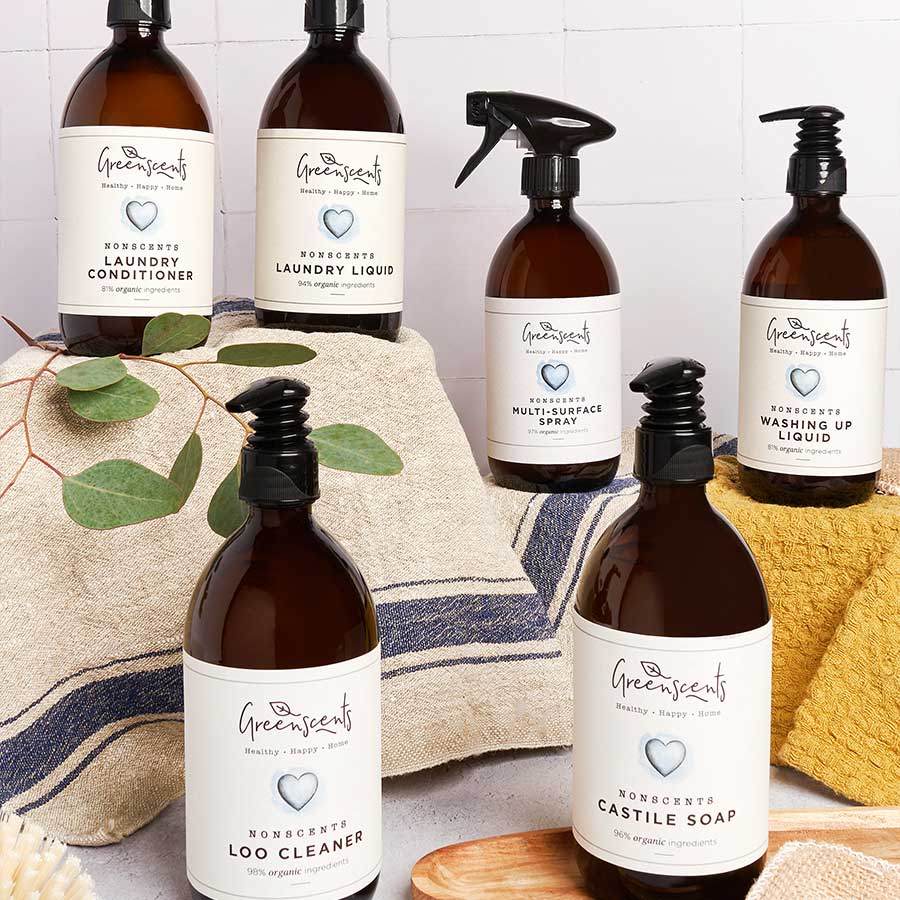
For people who want to avoid added fragrance, our Nonscents collection contains no added essential oils or fragrances.
3. Muddy paws, clean floors and happy walks
Autumn and winter are often particularly muddy for dog owners. A short, repeatable routine can make the inevitable paw prints less of a chore.

The five-minute post-walk reset
- Prepare the entrance. Keep an absorbent mat and a clean towel beside the door.
- Deal with paws first. Remove loose mud using a towel. Where necessary, use plain lukewarm water and dry gently, including between the toes. Never use household cleaning products directly on paws or fur.
- Remove the worst of the dirt. Depending on the flooring, dried mud can be easier to brush or vacuum than wet mud.
- Clean the affected surface. Use a cleaner suitable for your floor according to both the product and flooring instructions. Our Multi-Surface Spray includes a Nonscents fragrance-free option for suitable sealed surfaces. Keep pets away until the surface is dry.
- Get back to enjoying home. Put the towel in the wash and return to your usual routine.
The objective is not a permanently spotless home. It is a comfortable home that's easy to look after while enjoying life with pets.
4. How often should you wash pet beds, blankets and toys?
Pet bedding collects hair, dust, dander and everyday dirt. The US Centers for Disease Control and Prevention recommends cleaning pet beds and blankets every week [5]. It also suggests cleaning toys monthly and food and water bowls more frequently.

Here is a practical household schedule:
| Item | How often? |
|---|---|
| Pet blankets and removable bed covers | Once a week |
| Entire washable pet beds | Weekly, if suitable for laundering; follow care instructions |
| Heavily used, muddy or noticeably smelly bedding | Sooner as needed; twice weekly may be practical |
| Non-washable bed interiors | Inspect and vacuum weekly; spot-clean as the maker advises |
| Washable soft toys | About once a month, or sooner when dirty |
| Bedding soiled with urine, faeces or vomit | Clean promptly; consider additional hygiene steps if anyone is ill |
The weekly interval is from CDC guidance; the twice-weekly suggestion is a practical adjustment for heavily soiled or frequently used bedding, not a universal veterinary requirement. If your pet has an infectious illness or anyone in the household is at increased risk, seek appropriate veterinary or medical advice about extra cleaning and disinfection [5].
Does machine washing help remove pet allergens?
Yes. In a peer-reviewed 2022 study, Choi and colleagues found that machine washing with detergent removed very high proportions of measured dog and cat allergens from experimentally contaminated fabric samples [6]. The study supports regular laundering but did not test Greenscents products.
A straightforward laundry routine
- Remove loose hair before loading the machine.
- Check the bed or blanket's care label.
- Use the recommended detergent dose; more is not always better.
- Select a suitable temperature and wash programme for the fabric and hygiene needs.
- Rinse thoroughly and dry completely before returning bedding to your pet.
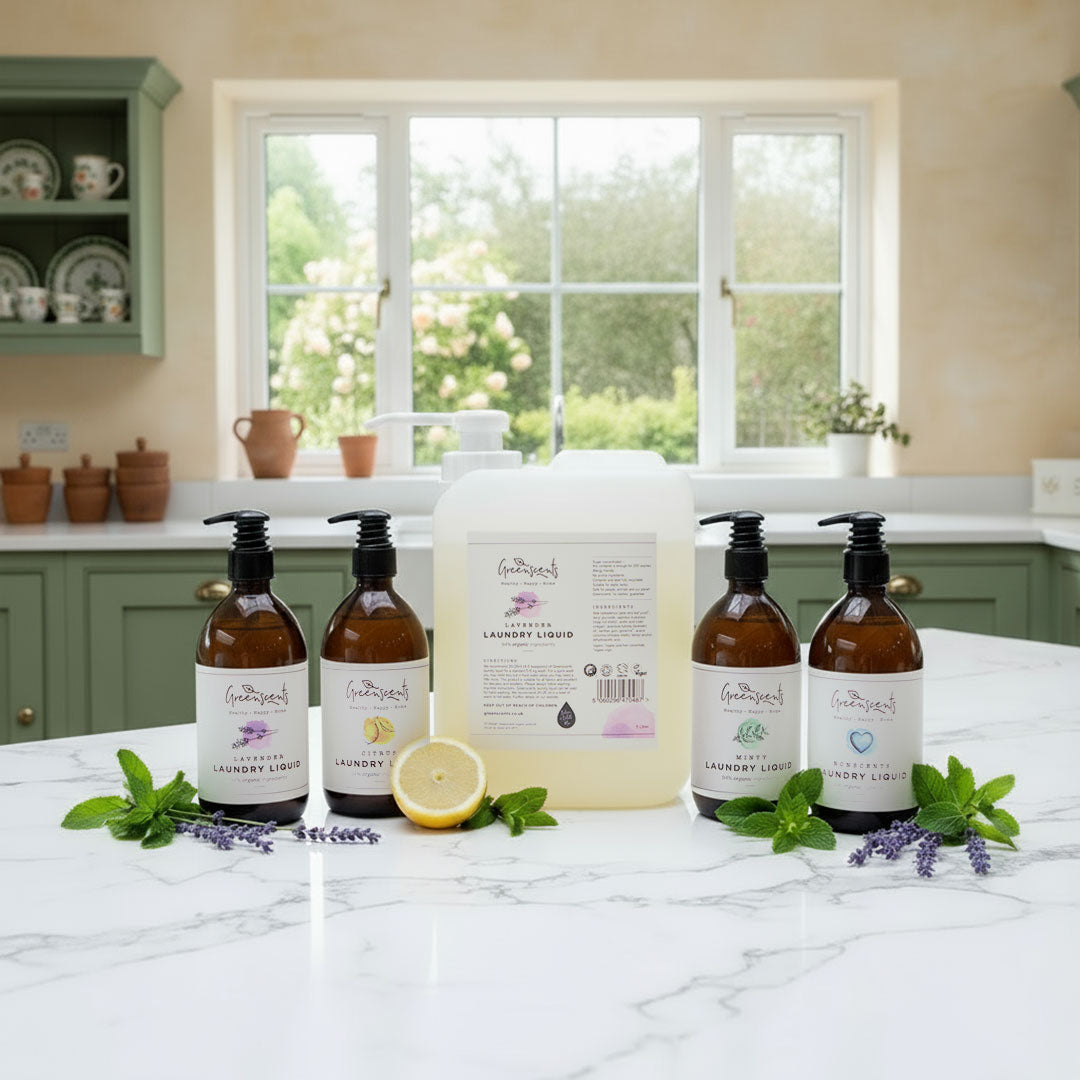
Our first choice for routine pet bedding is the Nonscents variant of Greenscents Laundry Liquid, without added fragrance or essential oils. Select Nonscents on the product page. It is a non-biological, independently certified organic household laundry product.
Persistent itching, redness, paw-licking or other skin symptoms should be assessed by a vet rather than automatically blamed on laundry detergent.
5. Which Greenscents fragrances should I choose for homes with dogs and cats?
Different essential oils have different properties, and exposure matters. Our scented Greenscents household cleaning products contain a total of 0.4% essential oils in the finished formulation. This is very different from applying neat essential oils, but the percentage alone does not prove that any product is safe for every animal or every use.
Our products are for household cleaning, not for cleaning animals themselves. They should be used according to the label, with pets kept away while cleaning and until surfaces are dry.
For homes with dogs
Nonscents is our first recommendation for bedding, blankets and homes with sensitive dogs. If you prefer a fragranced product for ordinary household surfaces, Lavender and Bergamot are the Greenscents options we would consider first. Veterinary-reviewed guidance identifies lavender and bergamot among oils that may be better tolerated by dogs when used carefully [7]. This does not amount to a safety test of Greenscents' finished formulations, and an individual dog may still react.
For homes with cats
We recommend Nonscents. Cats Protection and PDSA advise particular caution about essential oils, including lavender, citrus and peppermint [3,4]. Risk is usually greater with concentrated oils and direct exposure, but we would not recommend scented household cleaning products specifically for cat bedding or close-contact areas.

Greenscents fragrance choices at a glance
| Option | Homes with dogs | Homes with cats |
|---|---|---|
| Nonscents | First choice, especially for bedding | First choice |
| Lavender | Possible option for routine household surfaces, used as directed | Prefer Nonscents |
| Bergamot (Anti-Bacterial Spray) | Possible option for suitable household surfaces, used as directed | Prefer Nonscents |
| Citrus (orange/rosemary) | Not our first choice for pet bedding | Prefer Nonscents |
| Minty (peppermint/spearmint) | Avoid choosing for pet bedding or close-contact areas | Not recommended for cat bedding |
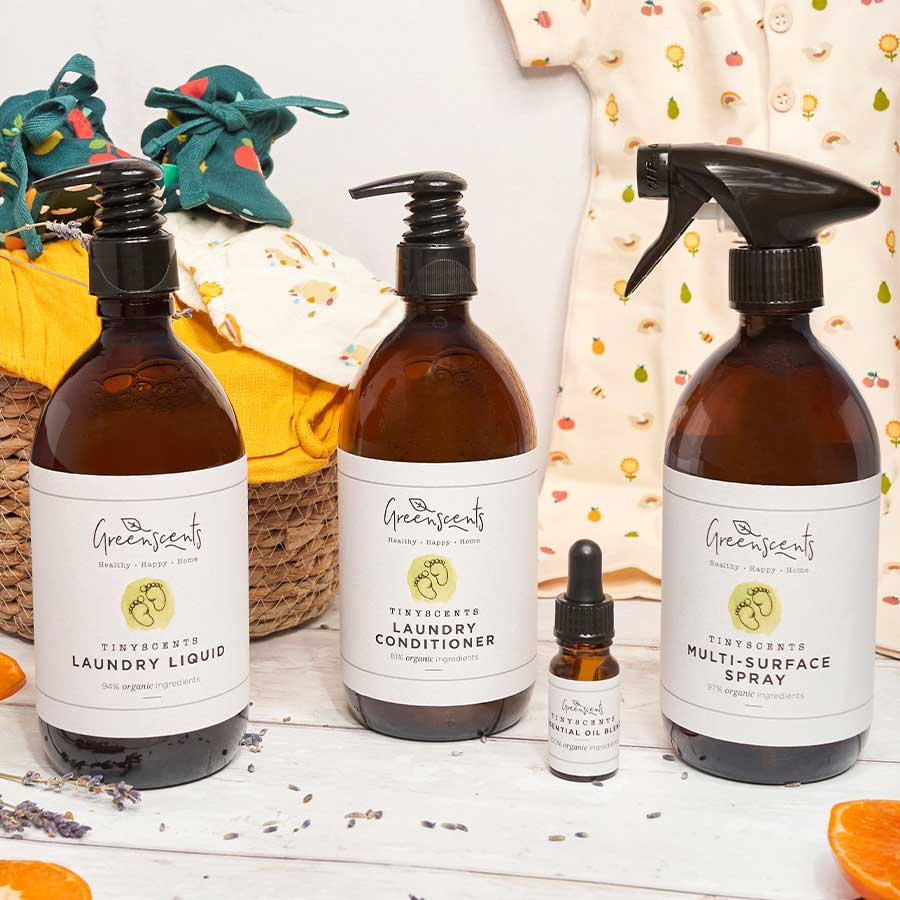
| Tinyscents | Not our preferred pet-bedding fragrance | Not recommended for cat bedding |
These are precautionary product-selection recommendations, not pet-safety certifications. Individual sensitivities, the specific essential oil, contact time and use conditions all matter. If unsure, choose Nonscents or ask your vet.
Why concentrated oils require extra caution
Essential oils are botanically derived but biologically active. In a veterinary study of 443 reported cases of concentrated tea tree oil exposure in dogs and cats, some animals experienced serious symptoms [8]. The study examined concentrated tea tree oil, not diluted Greenscents cleaning products. It nevertheless illustrates why 'natural' cannot automatically mean harmless.
- Never apply neat essential oils to an animal or add them directly to pet bedding.
- Avoid homemade cleaning mixtures with added essential oils around pets.
- Be particularly cautious with diffusers and aerosolised fragrance in homes with cats.
- Keep oils and household cleaning products securely out of reach.
6. Three social-media cleaning habits worth questioning
Social media is full of clever cleaning ideas. Some are useful; others deserve more scrutiny in pet households.
Adding essential oils to homemade cleaners
Concentrated oils may increase exposure and can be hazardous to some animals. Choose a properly formulated product rather than improvising with neat oils.
Using extra laundry liquid for stubborn mess
Excess detergent does not always deliver better cleaning and may be harder to rinse. Follow the recommended dose for the load, soil level and water hardness.
Mixing different household cleaners
Never combine cleaning products unless instructions specifically permit it. Some mixtures can generate hazardous fumes or reactions. For a task that requires disinfection, choose a suitable product and follow its label.
Good cleaning should be effective, straightforward and predictable — not a chemistry experiment.
7. Can you trust products labelled natural, organic or pet-safe?
These terms do not mean the same thing:
- Natural says little about concentration or safe exposure by itself.
- Fragrance-free means a formulation choice to avoid added fragrance; it does not mean edible or non-irritating in every circumstance.
- Cruelty-free concerns animal testing, not whether a product may be swallowed by a pet.
- Certified organic means independent assessment against a particular organic standard; it is not a universal guarantee of safety.
Greenscents products are independently certified by the Soil Association, and our wider credentials include Cruelty Free International, The Vegan Society and Palm Oil Free Certification. These schemes verify different aspects of our ingredients, sourcing and ethical practices. Read about our certifications and the thinking behind our Low-Tox Home Guide.
We believe customers deserve ingredient transparency and careful claims, not assurances that any household cleaner is harmless in every situation.
8. A simple weekly routine for homes shared with pets
| When | What to do |
|---|---|
| After muddy walks | Wipe and dry paws; tidy up muddy entrance areas |
| Every day | Refresh water bowls and clean feeding areas; wash wet-food bowls after each use |
| A few times weekly, or as needed | Vacuum or brush high-traffic areas where hair and dust collect |
| Every week | Wash bedding and blankets; inspect and clean mats and pet areas |
| Twice weekly when needed | Launder heavily used or muddy bedding |
| About monthly, or sooner | Wash suitable pet toys following care instructions |
| Whenever cleaning | Keep pets clear of chemicals and wet surfaces, ventilate and store products securely |
A household with several energetic dogs will have different needs from one shared with an elderly cat. Adjust the routine to your animals and enjoy your home without trying to make it perfect.
9. What if my pet encounters a cleaning product?
If your dog or cat swallows a cleaner, has significant contact with a product or develops concerning symptoms following exposure, contact your vet promptly. Keep the packaging available so you can give accurate ingredient information. Do not make your pet vomit unless instructed by a veterinary professional.
In the UK, Animal PoisonLine offers specialist advice for pet owners on 01202 509000. For general preventive guidance, consult the PDSA and Cats Protection.
10. A cleaner home for everyone who shares it
Our animals give us companionship, amusement, affection and plenty of reasons to get outside. The occasional muddy paw print or messy blanket is a small price to pay.
Use products thoughtfully, keep unnecessary fragrance to a minimum where appropriate, wash the blankets, clean the floor — and then get back to enjoying your pets.
Because a happy home is one that everyone can enjoy.
Explore Greenscents Nonscents Cleaning & Laundry
Scientific references and veterinary guidance
- Merck Veterinary Manual. Toxicoses From Household Cleaners and Personal Care Products in Animals. Veterinary toxicology overview.
- PDSA. How to keep your pets safe from toxic cleaning products.
- Cats Protection. Cats and essential oils.
- PDSA. Cats and essential oils.
- Centers for Disease Control and Prevention (2026). About Cleaning and Disinfecting Pet Supplies; recommends weekly cleaning of pet bedding and blankets.
- Choi, Y.-J., Seong, S., Lee, K. S., Lee, K., Seo, H. & Oh, J.-W. (2022). Effects of mechanical washing and drying on the removal of pet allergens. Allergy & Asthma Proceedings 43(5), e25–e30. DOI: 10.2500/aap.2022.43.220029.
- Mitchell, S. C., DVM (2024), veterinary reviewed. Essential Oils Safe for Dogs: 7 to Use and 12 to Avoid. PetMD.
- Khan, S. A., McLean, M. K. & Slater, M. R. (2014). Concentrated tea tree oil toxicosis in dogs and cats: 443 cases (2002–2012). Journal of the American Veterinary Medical Association 244(1), 95–99. DOI: 10.2460/javma.244.1.95.
This article gives general household cleaning information and is not a substitute for individual veterinary advice.
Share